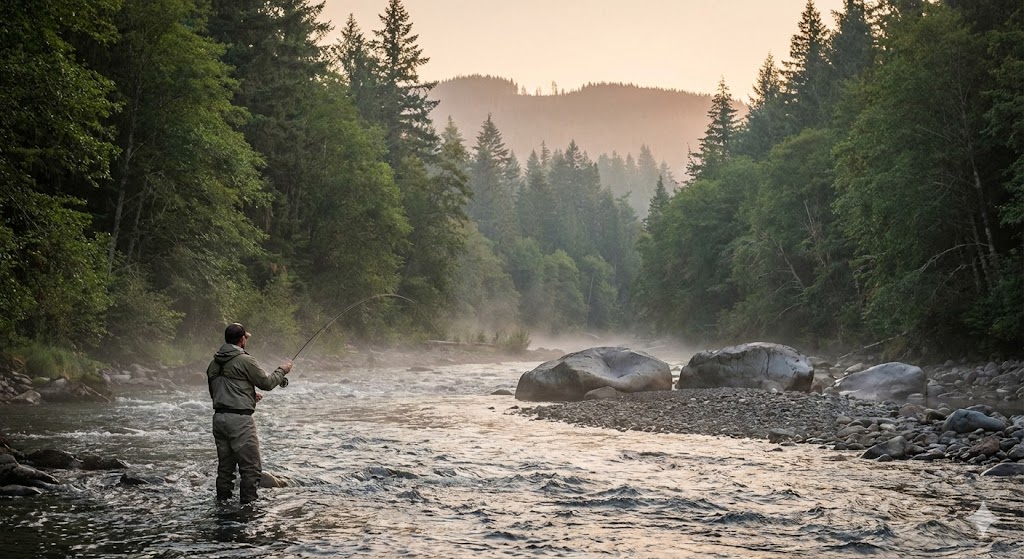
Fishing the Toutle River is about more than just what lands in your net; it is about witnessing one of nature’s greatest comeback stories. Devastated by the 1980 eruption of Mt. St. Helens, the Toutle has spent decades recovering. Today, it offers a rugged, rewarding experience for anglers chasing steelhead and salmon in the shadow of the volcano. Whether you are walking the bank behind the cabin or exploring the upper forks, here is how to fish the Toutle like a local.
Related Guides (Most Common Issues)
- Wildlife & Nature Near Mt. St. Helens This part of southwest Washington does not advertise itself loudly, and that is exactly why…
Two Forks, Two Experiences
The Toutle is unique because its two forks offer completely different challenges. As a guest, you have the advantage of waking up right next to the North Fork, but knowing when to drive to the South Fork is the key to a successful trip.
The North Fork: Your Home Water
The river flowing past the cabin comes directly from the Mount St. Helens crater. It is wild, dynamic, and famous for its “glacial flour” – fine sediment that gives the water a unique milky gray or green color. Because it is fed by snowmelt, it can change character quickly.
Why fish it? Convenience and trophy potential. There is nothing like grabbing your rod and walking down to the bank with your morning coffee. When the water level drops and the color shifts from “milky” to “steelhead green,” the North Fork is world-class. It is often managed for wild steelhead, offering the chance to connect with truly powerful, native fish.
The South Fork: The Reliable Backup
If you wake up and find the North Fork is too high or muddy from recent rain, don’t worry—your day isn’t over. The South Fork was spared the worst of the eruption and generally runs clearer and more consistent.
Strategy: Check the river behind the cabin first. If visibility is low (less than a foot), hop in the car and drive 15 minutes to Harry Gardner Park on the South Fork. It acts as the perfect “Plan B” to ensure you always have fishable water.
What to Catch & When
The Toutle is primarily a steelhead and coho river. Timing is everything.
- Winter Steelhead (Dec – March): The main event. These fish are aggressive and strong. Drift fishing with corkies and yarn or float fishing with jigs are the go-to techniques.
- Summer Steelhead (June – August): A smaller but fun run. These fish are active in the early mornings and late evenings—perfect for guests staying at the cabin who want to cast a few times before breakfast.
- Coho Salmon (Late Sept – Nov): The “Silvers” arrive with the fall rains. Twitching jigs in calm pockets or casting spinners can be deadly effective.
- Cutthroat Trout: Plentiful in the summer, especially in the tributaries. Great fun on light tackle or fly rods.
Essential Rules & Conditions
Washington regulations change frequently to protect wild stocks. Before you cast, you need to know two things: the rules and the water clarity.
Check the “Emergency Rules” First
The Toutle often has special restrictions, such as barbless hooks only or selective gear rules (no bait). Always check the official WDFW app or website for the specific section you are fishing.
Pro Tip: Check the river gauge before you drive. If the North Fork Toutle gauge is spiking, the main river below the forks might be too muddy (“blown out”). In that case, head up to the South Fork or try Silver Lake.
Access Points
From the Cabin
Guests at the River Cabin have private frontage on the mainstem Toutle. It is perfect for plunking (stationary fishing) or casting spinners for moving fish. There is nothing quite like catching dinner within sight of your back deck.
Harry Gardner Park
Located on the South Fork (about 15 mins from the cabin), this park offers easy bank access and a good boat launch for drift boats. It is a very popular spot during the winter steelhead run.
Nearby Lake Fishing Alternatives
If the river is too high or you want a more relaxed day on the water with the kids, you have two excellent stillwater options just a short drive away.
Silver Lake (Family & Bass)
Distance: 15 minutes from the cabin
Best For: Kids, warm water species, and relaxed boating.
Silver Lake is one of the best Largemouth Bass fisheries in Washington. It is shallow, weedy, and full of structure—perfect for casting topwater lures on a summer evening. For kids, a simple worm under a bobber off the docks at the Seaquest State Park boat launch will almost guaranteed produce Yellow Perch, Bluegill, or Crappie.
Coldwater Lake (Trophy Trout & Scenery)
Distance: 45 minutes (up Hwy 504)
Best For: Kayakers and serious trout anglers.
Formed by the 1980 eruption, this lake is filled with big, wild Rainbow and Cutthroat Trout. It is strictly managed (often catch-and-release or limited harvest, no bait allowed), which keeps the fish aggressive and large. Note that no gas motors are allowed—it is electric or paddle only, making it incredibly peaceful.
Plan Your Fishing Trip
The best fishing trips end with a hot meal and a warm fire. Our cabin is set up for anglers, with plenty of room for gear and immediate access to the water.
Need more ideas for the non-anglers in your group? Check our main guide: Things to Do Near Mt. St. Helens.