Conquering the crater rim of Mount St. Helens is a punishing, awe-inspiring feat that demands months of preparation, especially in 2026. Between the grueling physical exertion on the ash fields and the logistical hurdles of securing highly competitive permits amidst ongoing infrastructure repairs, planning your summit requires extreme precision. But the most critical – and often overlooked – element of a successful climb is what you do immediately after you descend.
For high-intent adventurers looking for a seamless transition from the harsh volcanic slopes to absolute relaxation, securing a riverfront basecamp in Castle Rock, WA is the ultimate strategy. This post is all about how to navigate the 2026 climbing season, understand the science of post-hike hydrotherapy, and maximize your recovery at rivercabin.us.
Navigating the 2026 SR-504 Road Closures
The first logistical hurdle for 2026 travelers is understanding the physical access to the mountain. Following a massive South Coldwater Slide in May 2023, a gravity-driven debris flow washed out the Spirit Lake Outlet Bridge and caused catastrophic damage to the upper portion of State Route 504. Consequently, the Johnston Ridge Observatory and the highway beyond the winter gate at milepost 45.2 remain completely inaccessible. Construction to replace the bridge is slated to begin in April 2026, meaning Johnston Ridge will not reopen to the public until at least April 2027.
However, the mountain is still very much open for business. By making Castle Rock your basecamp, you gain immediate, friction-free access to the attractions that are open. You can easily visit the Mount St. Helens Visitor Center at Silver Lake, just five minutes from town, or travel up SR-504 to the Forest Learning Center and the Science and Learning Center at Coldwater. Castle Rock’s proximity saves you from the multi-hour detours required when staying in the more remote eastern or southern corridors.
Securing Your 2026 Climbing Permit
A Mount St. Helens climbing permit is strictly required year-round for anyone traveling above 4,800 feet. During the peak climbing season, the bureaucratic competition can be as intense as the climb itself. Here are the crucial 2026 regulations you need to know:
- April 1 – May 14: The daily quota is limited to 350 climbers per day.
- May 15 – October 31: The daily quota drastically drops to just 110 climbers per day.
- Cost & Release Times: Permits cost $20 per climber per day, plus a non-refundable $6 reservation fee per transaction. They are released in one-month increments on the first day of the preceding month at exactly 7:00 AM Pacific Time via Recreation.gov (for example, June permits open on May 1).
- Winter/Spring Climbs: If you are climbing between December 1 and March 31 out of the Marble Mountain Sno-Park, climbing permits are unlimited and free (self-issued at the trailhead), but a Washington State Sno-Park Permit ($22/day or $40/seasonal) is strictly required for your vehicle.
The Physical Toll and The Science of Hydrotherapy
Whether you tackle the Monitor Ridge route in summer – navigating massive boulder fields, razor-sharp pumice, and loose ash – or the longer Worm Flows winter route, you will face seven to eight hours of intense cardiovascular and muscular output. This extreme exertion causes muscular micro-tears and heavy lactic acid buildup, inevitably leading to Delayed Onset Muscle Soreness (DOMS).
This is where your recovery protocol becomes non-negotiable. Soaking in a perfectly heated hot tub immediately after your descent is backed by rigorous physiological science. Warm water immersion efficiently raises your core body temperature and triggers profound vasodilation – the widening of blood vessels. This expanded blood volume flushes out accumulated lactic acid and delivers vital oxygen to damaged muscle tissues to accelerate repair. Furthermore, the transition from the harsh, high-stress mountain environment to a hot tub triggers your body to shift out of a “fight or flight” sympathetic state and into a restorative parasympathetic state, lowering cortisol and releasing natural endorphins.
Your Private Toutle River Sanctuary: rivercabin.us
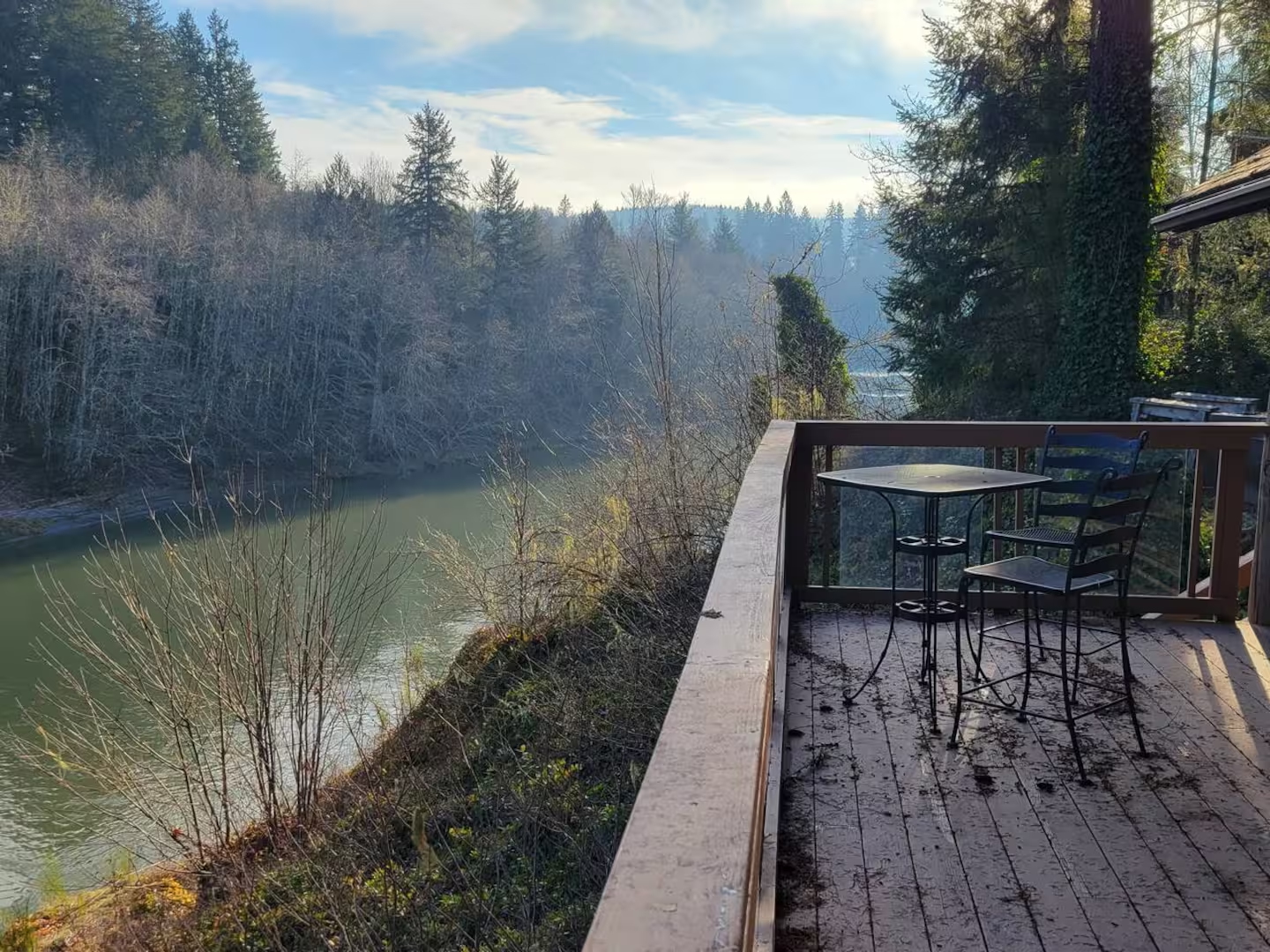
Why fight traffic back to Seattle or Portland when you can retreat to your own private riverfront sanctuary just minutes from the I-5 corridor? Nestled directly on the banks of the Toutle River, rivercabin.us is engineered specifically for the recovery-focused traveler.
Our property has earned 4.95 out of 5 rating across 241 reviews, achieving official “Guest Favorite” status. In fact, previous climbers and guests have specifically praised our hot tub in more than 100 different reviews. Imagine shedding your ash-covered boots, stepping into a bathroom warmed by radiant floor heating, and slipping into a pre-heated hot tub while the acoustic white noise of the Toutle River masks any remaining travel anxiety.
To preserve this tranquil, high-end environment, the cabin is strictly an adult-only retreat, ideal for couples, creatives, and athletes requiring a quiet reset. Please note that parts of our natural riverfront property feature steps, uneven terrain, and a sturdy wooden ladder to access the cozy sleeping loft, making it mostly unsuitable for guests with mobility limitations. A signed liability waiver is also required prior to your stay.
You’ve conquered the volcano; now it’s time to conquer your recovery. Secure your dates at rivercabin.us today and ensure your Mount St. Helens adventure ends in absolute restoration.